

Water Conservation and Irrigation
Clallam Conservation District offers:
Irrigation Water Management Plans (IWMPs) customized guidance for farms focused specifically on water efficiency and sustainability.
What’s your Irrigation District? View our interactive Sequim Irrigation Map HERE
Funding for Irrigation Efficiencies Projects, is available to farmers and share the cost of improvements to on-farm irrigation systems.
Installation of soil moisture monitoring equipment to enhance data-driven water management on the ground.
Water Conservation and Rainwater Collection
Download our list of Water-WisePlants for Landscaping or the Saving Water Partnership plant list for ideas about plants that are particularly well suited for dry conditions.
Download our guide to Rainwater Harvesting to learn the basics of collecting and storing roof runoff water.
More Water Conservation Tips can be found at the following websites:
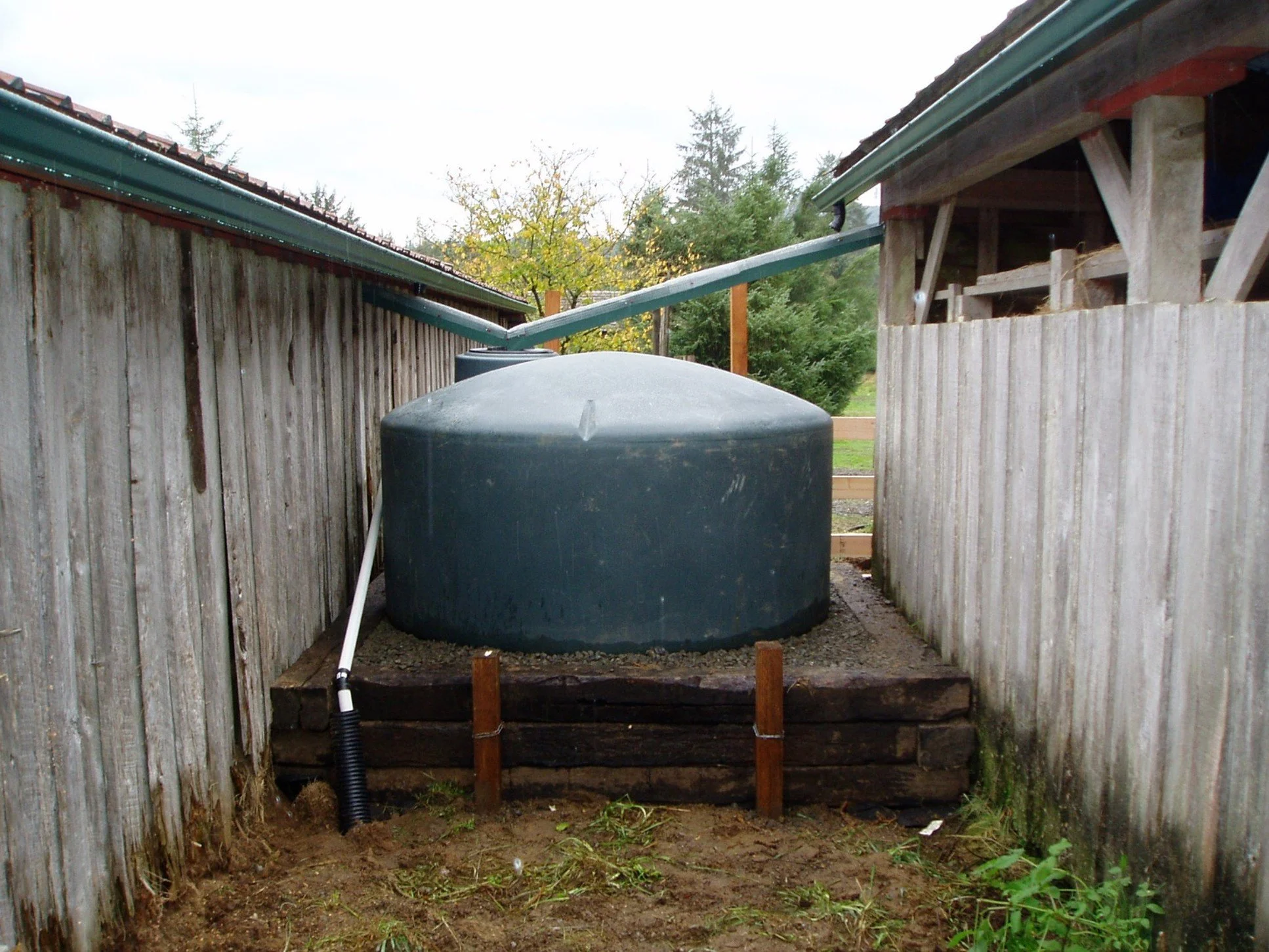
Pictured is a 1,100 gallon cistern used to collect roof water for livestock watering on a farm in Clallam Bay.
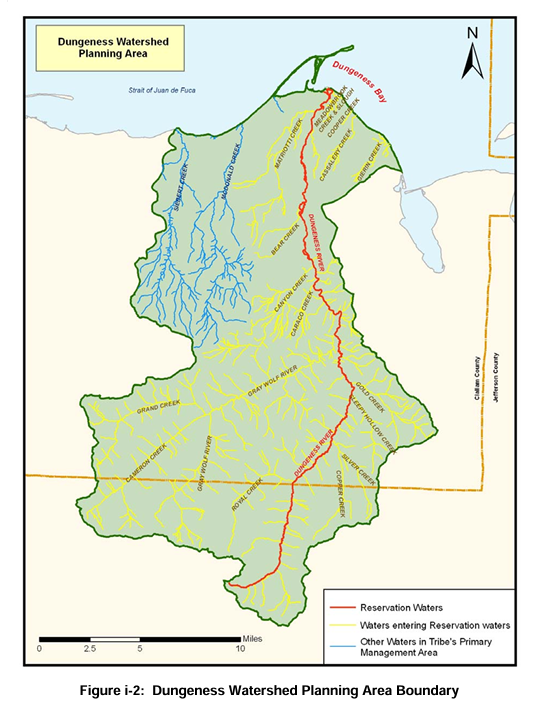
Map of Dungeness Watershed
Dungeness Drought Watch 2026
Local partners are working together to support salmon migration during drought conditions, Washington Water Trust, Dungeness Water Users Association and JSKT may implement up to four pulse flows this irrigation season. During a pulse flow, irrigation diversion gates are temporarily closed for approximately 12-24 hours, allowing more water to remain in the Dungeness River and encouraging salmon to move upstream into spawning habitat.
If you are an irrigation shareholder, please make sure your irrigation district or company has your current email address so you receive notification of scheduled pulse flows. Clallam Conservation District does not send these notifications.
Not sure which irrigation district serves your property? Use our Interactive Irrigation District Map to identify your district and find contact information. Contact your irrigation district or company directly to update your email address and receive pulse flow notifications. Clallam Conservation District does not send out notifications.
Irrigation in the Dungeness Valley
Past, Present & Future
History
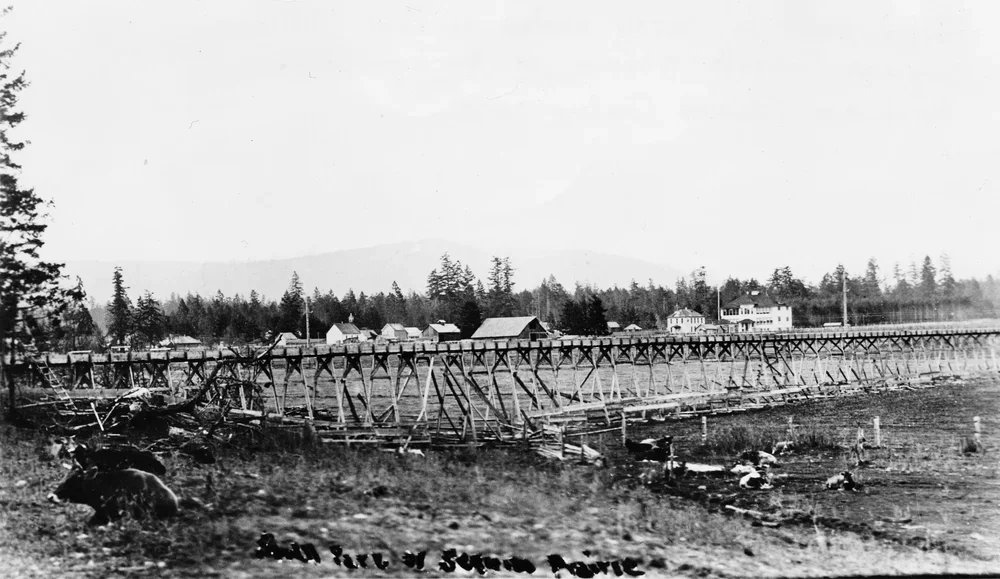
In 1895 the early settlers struggling to eke out a living on the arid Sequim Prairie, which annually only receives about 17” of rainfall, decided to work together on a venture to deliver Dungeness River water to their dusty fields. Throughout the winter of 1895-96, ditches were dug and wooden flumes were built to get water to seemingly flow uphill from the river to the prairie. Their hard work paid off when the first irrigation ditch was completed in the spring of 1896.
Their success inspired the formation of numerous other irrigation companies and districts, eventually delivering irrigation water to about 11,000 acres of farmland throughout the Dungeness Valley.
Flood irrigation was the only means of irrigating until the arrival of electricity for pumping following World War II. Flood irrigation is most conducive to the growing of pasture and hay, which combined with the mild, dry climate helped the Dungeness Valley develop into a world class dairy region. By 1950, about 7,000 cows were being milked on about 700 dairy farms in the Dungeness Valley.
Inefficient and environmentally costly flood irrigation eventually gave way to sprinkler irrigation. Stray salmon in the ditches – a common occurrence – was eliminated with fish screens at the canal headgates. Yet as recently as the 1980s, irrigators were taking as much as 80 percent of Dungeness River flows.
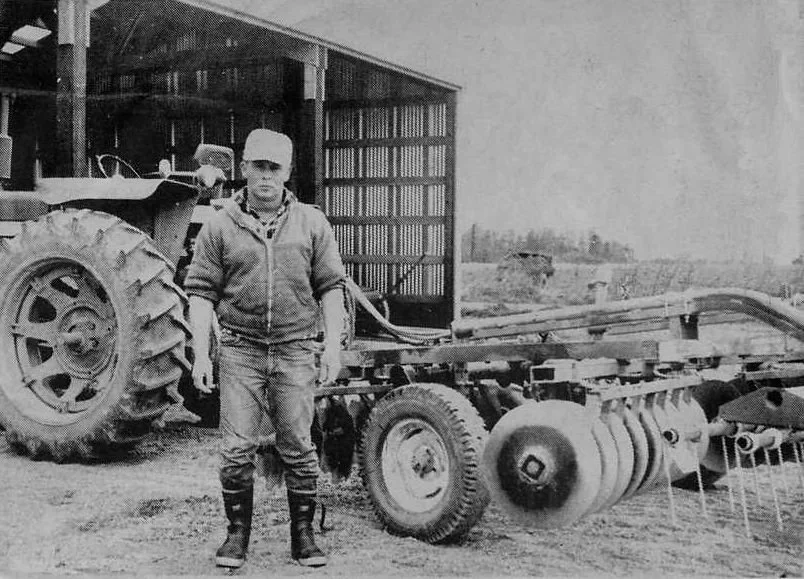
John Jarvis, Dairy Farmer in Sequim
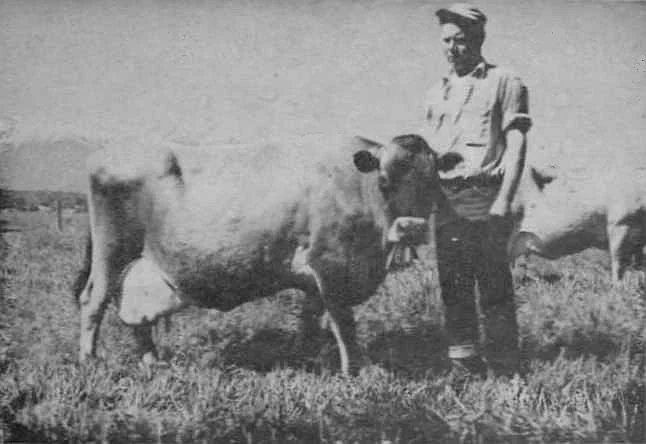
John Jarvis, Dairy Farmer in Sequim was on the CCD board of Supervisors in 1964 and again in 1977.
Water Conservation & Water Quality Improvements
Clallam Conservation District contributed essential technical and financial assistance for the vast majority of the ditch piping. Learn more about these projects HERE. Irrigation piping projects address two of the Conservation District’s top priorities: water conservation and water quality. Piping of the irrigation ditches greatly reduces water loss from evaporation and from ditches leaking water into the ground, helping to conserve precious water that can then be left in the Dungeness River for the salmon. Piping also eliminates the potential for contaminants to get into the irrigation water delivery system. In fact, many of the piping projects have resulted in significant reductions in fecal coliform bacteria loading to Dungeness Bay.
In addition, improving irrigation efficiencies often results in a more reliable water supply and less energy required for pumping – a benefit to farmers and energy suppliers. These benefits in turn foster more viable agriculture, thus helping to maintain farmland – another of the Conservation District’s resource conservation priorities.
For more information please access our Frequently Asked Questions regarding irrigation piping, here!
Future Conservation Efforts: Building Climate resiliency for the salmon and the farmers
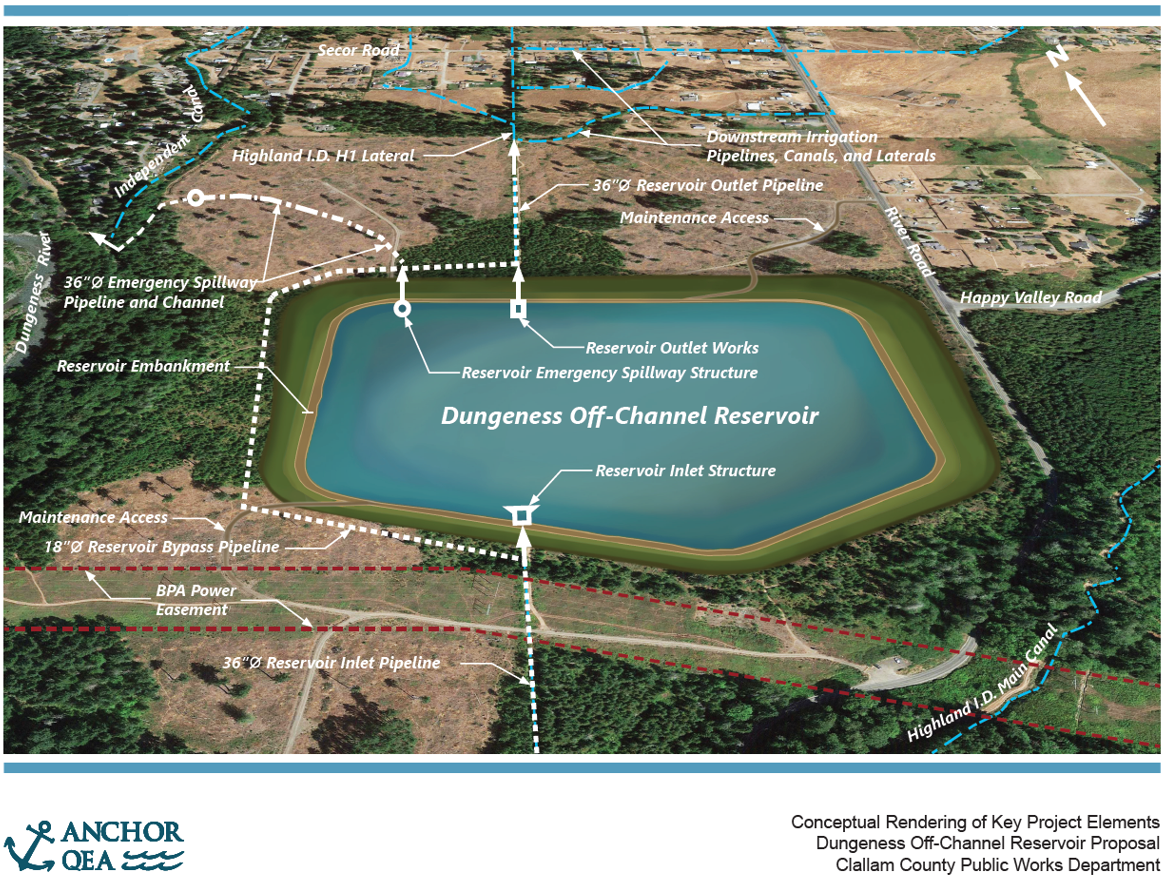
Climate projections suggest that drought years and early snowpack melt will be the norm. Losing snowpack early will directly impact our available water resources in the later dry season. Thus, work to improve efficiencies of irrigation ditches continues, as well as planning for the Dungeness Off-Channel Reservoir project This project will divert high river flows to store in an off channel reservoir when water is abundant, during the winter and early spring rainy seasons. This water will be used for late summer irrigation, reducing diversions from the Dungeness River. This effort keeps water in stream for salmon and helps sustain viable agriculture in the Dungeness Valley
Irrigation Water Management Resources
Water Conservation Resources
Ready to Learn More?
Contact us to get started.